THE BARABAR ANOMALY
What happens when ancient stonework exceeds modern tolerances

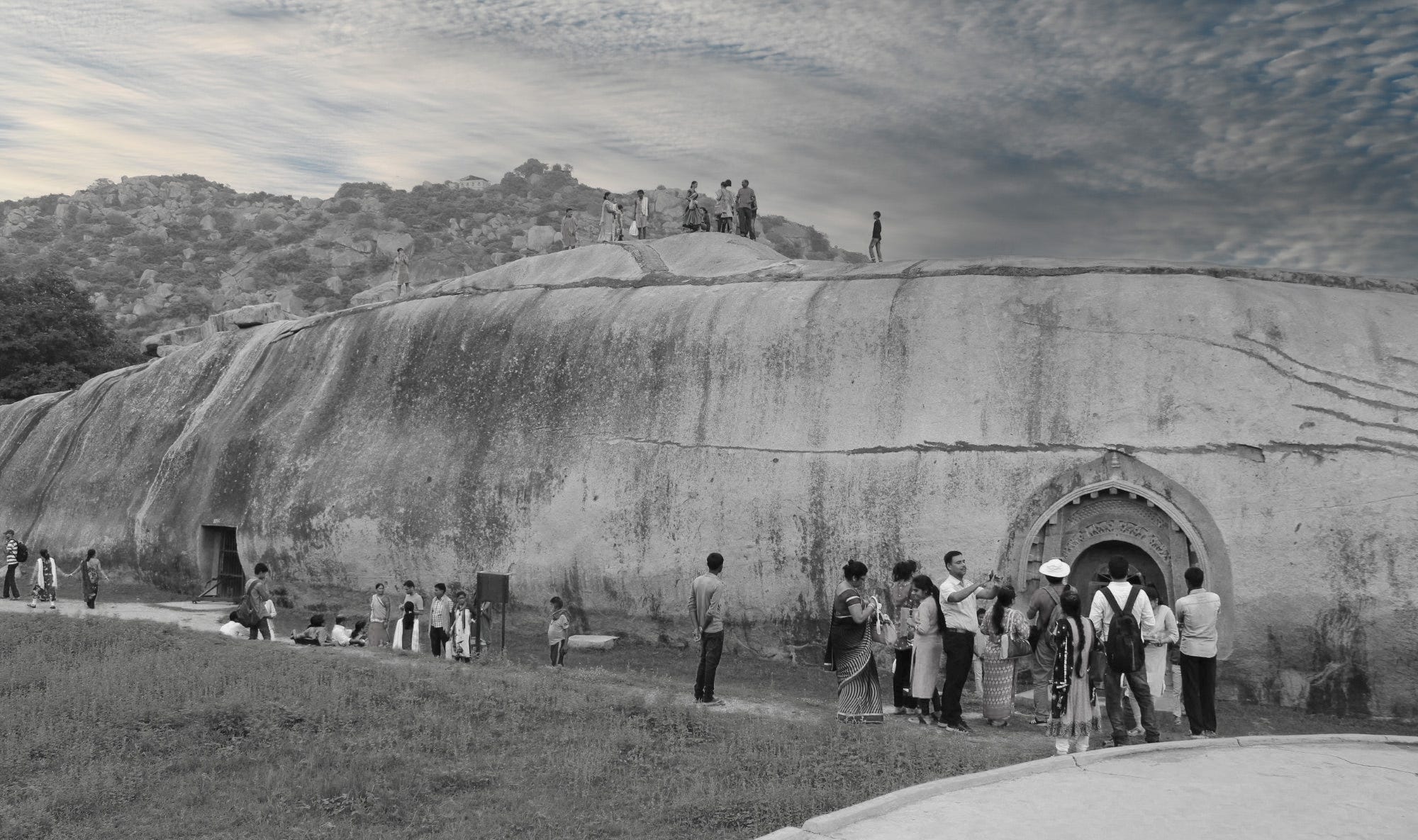
This is part 2 of a three-part series on ancient technology mysteries. Baalbek, the first one was about moving giant stones. Barabar is about re-moving them.
On paper, Barabar is a handful of man-made caves in India, dated to around 300 BCE, carved into solid granite and, according to mainstream archaeology, gifted to a sect of Buddhists as a rain shelter. At least, that’s the official story.
But once you look closely—really closely—the whole thing stops sounding like history and starts looking like a technical Tour de France Force.
Unlike Baalbek’s trilithon, where the mystery was quarrying and transporting 900 ton stones, the caves at Barabar were excavated and polished with a mathematical precision.
According to the official line, this was all done with hand tools—hammer, chisel, picks—and maybe some abrasives. No steel anything, no lasers, no powered grinders. Just a lot of time, sweat, and a shit load of superhuman patience.
Let’s take a closer look
The Cave That Should Not Exist
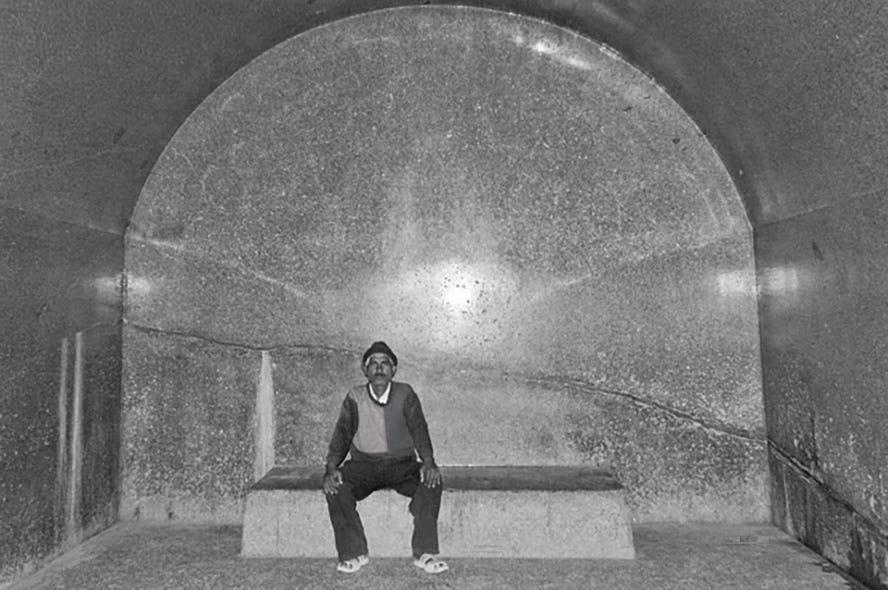
To the untrained eye, Barabar is already unnerving. The walls don’t just look “nicely finished”—they look polished, almost metallic in the right light. The ceilings form smooth cylindrical and spherical vaults, and the floors and walls feel uncannily straight and true. But human eyes, or even mechanical instruments, cannot detect what’s really going on.
Then somebody brought in a 3D laser scanner…
The granite walls are both smooth and flat to a degree that rivals industrially polished granite slabs, including the compound curved ceilings.
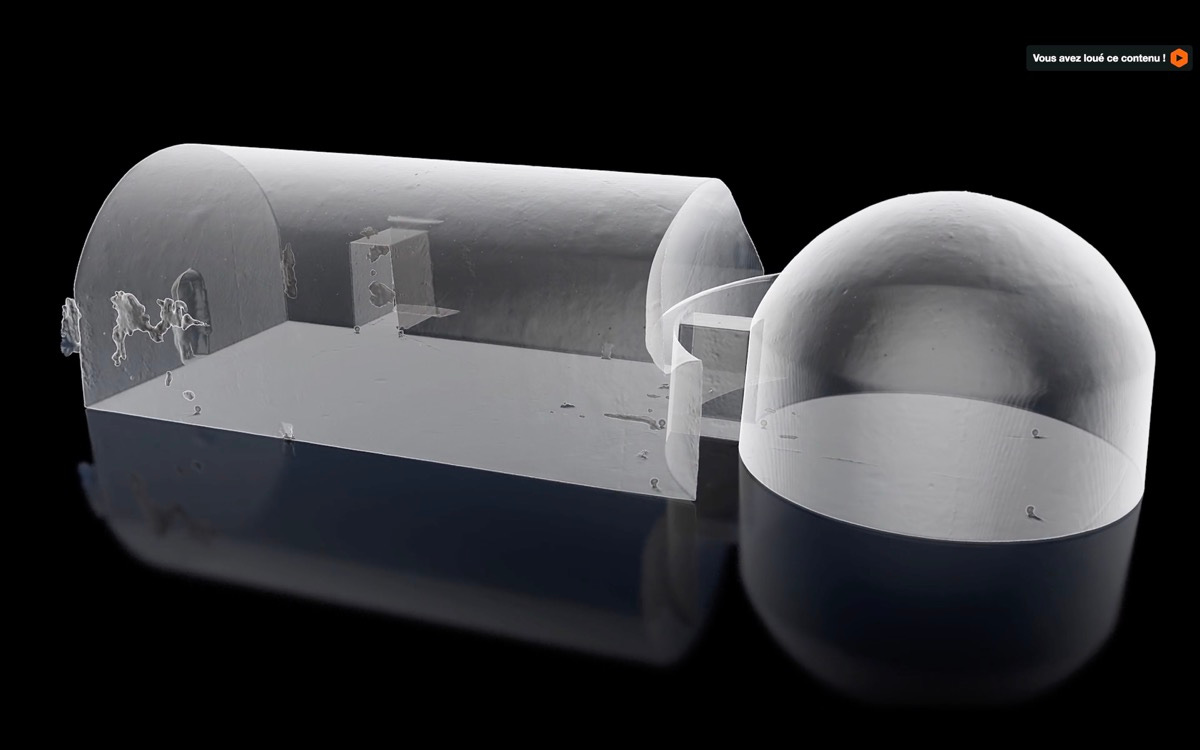
Ceilings are made of complex combinations of cylinders and spheres, mirrored left/right with millimeter-level symmetry.
Roughness values on some surfaces are just slightly above window glass—and far better than a factory-polished granite countertop.
Walls and ceilings are symmetrically aligned to within fractions of a degree over several meters. Inside corners are perfectly sharp.
That level of geometric control inside a granite cavity is not “nice workmanship.”
It’s off-the-scale precision metrology. The true genius of Barabar can only be appreciated when analyzed by a digital model. Which not only begs the question as to not only how they did it, but how they validated it?
Modern stonemasons—people who actually work granite for a living—looked at the data and basically said: on a difficulty scale of 1 to 10, Barabar is a 10...or maybe a 12. Several admitted that, with modern tools, they could probably make something that looked similar—but they doubted they could meet the specs revealed by the scans.
It’s not that we can’t polish granite today. Of course we can.
It’s that doing it to this degree of accuracy, by hand, on vertical and curved surfaces, inside a cave, with no room for error, and no evidence of tooling infrastructure, is… let’s just call it non-trivial. And we still don’t know what they used for lighting or how they handled the dust problem.
No Prototypes?
One of the more awkward details for the standard narrative: Barabar and its sister site, Nagarjuni, spontaneously appear in history like a software release with no beta:
No clear learning curves or prototypes leading up to them.
Contemporary and later caves in the same region are dramatically rougher.
Instead, Barabar is like a spike where the progress graph goes from “what you might expect” to “insanely precise” and then back down again. By the way, it’s the same pattern for most of the ancient mysteries: off-the-chart brilliance, then never again replicated.
So either: the techniques were imported from somewhere else and then lost, or we’re missing whole chapters of the story.
The Rain Shelter
Inscribed texts near some caves say they were donated as shelters for an ascetic group during the monsoon. It’s very possible the king gave something he didn’t build. But that doesn’t tell you who actually did the engineering, or why. If you genuinely wanted a functional rain shelter, you wouldn’t need:
insane millimeter-accurate symmetry,
vaulted ceilings made from fused spherical segments,
and mirror-polished granite with strange acoustic properties.
You’d carve a rough cave in softer rock and call it a day. Or just build a conventional shelter. Duh.
Barabar is overkill for a shelter — spectacular, expensive, technically obsessive overkill.
Designed for Sound?
So if it’s not a rain refuge for monks, what was its purpose? Given the strange acoustics, some sound engineers brought in their equipment and determined:
Speech becomes almost unintelligible a short distance from the speaker.
Certain low frequencies are massively amplified and sustained—far beyond what you’d expect from a random cave.
Different chambers, with different shapes and sizes, share the same resonance frequency in at least one key band, as if they were tuned.
Granite’s low sound absorption plus perfectly polished, slightly sloping (87°) symmetrical walls create a bizarre mix of reverberation and resonance. Some frequencies hang in the air for close to a minute.
Was that intentional? Who knows? But if it is, it adds another layer of difficulty: Barabar was not just about carving exact forms, but it was designing those forms for specific sound effects. You don’t accidentally tune three different granite cavities to the same low frequency any more than you accidentally tune three violins to the same note.
The Questions That Won’t Go Away
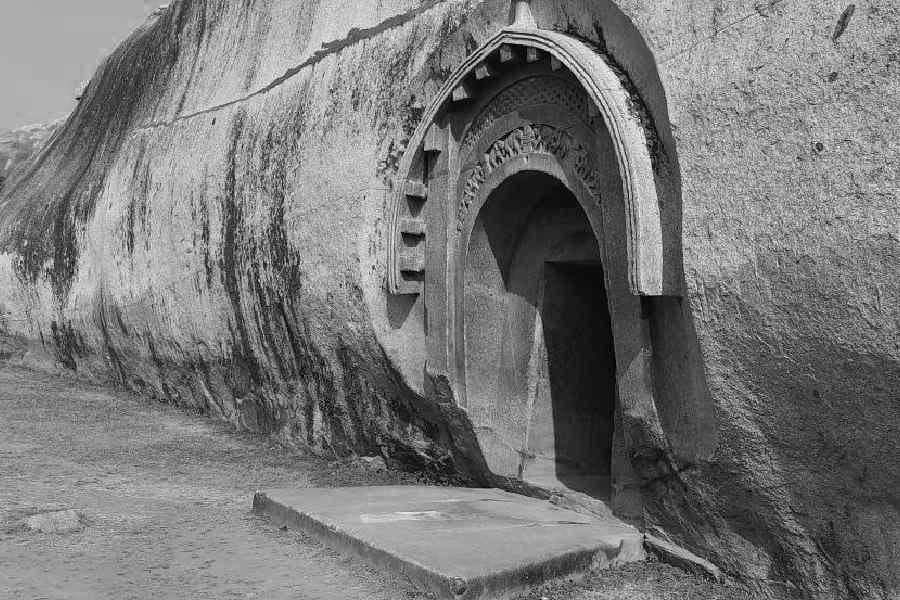
What was Barabar’s purpose?
Who had the geometric or acoustical understanding to design these shapes?
Who had the technical ability to cut them into granite with no room for error?
How did they even validate the dimensions, angles, flatness, curves, parallelism, and symmetry when the observed accuracy is beyond mechanical metrology?
How did they illuminate the work areas without leaving carbon traces?
Why is there no evidence of previous sites or early attempts?
And lastly, why build something this precise just to “keep the rain off of some monks”?
So, like Baalbek, Barabar quietly sits there, with in-your-face evidence that disagrees with the conventional linear story of human progress. And according to the experts, Barabar should not be possible, even today. OK, maybe today, with some 21st century computer-aided equipment — but good luck getting anyone to fund it.
And Yet— somebody did it…
If you want a deeper dive into this, check out these documentaries:
BARABAR - Breathtaking Precision and Geometry in Ancient Indian Granite Caves
BARABAR, THE ARCHAEOLOGICAL SITE OF THE FUTURE
you keep posting fascinating information. at least fascinating to me.
thank you
Fascinating- thanks for the break from the Orange Turd.